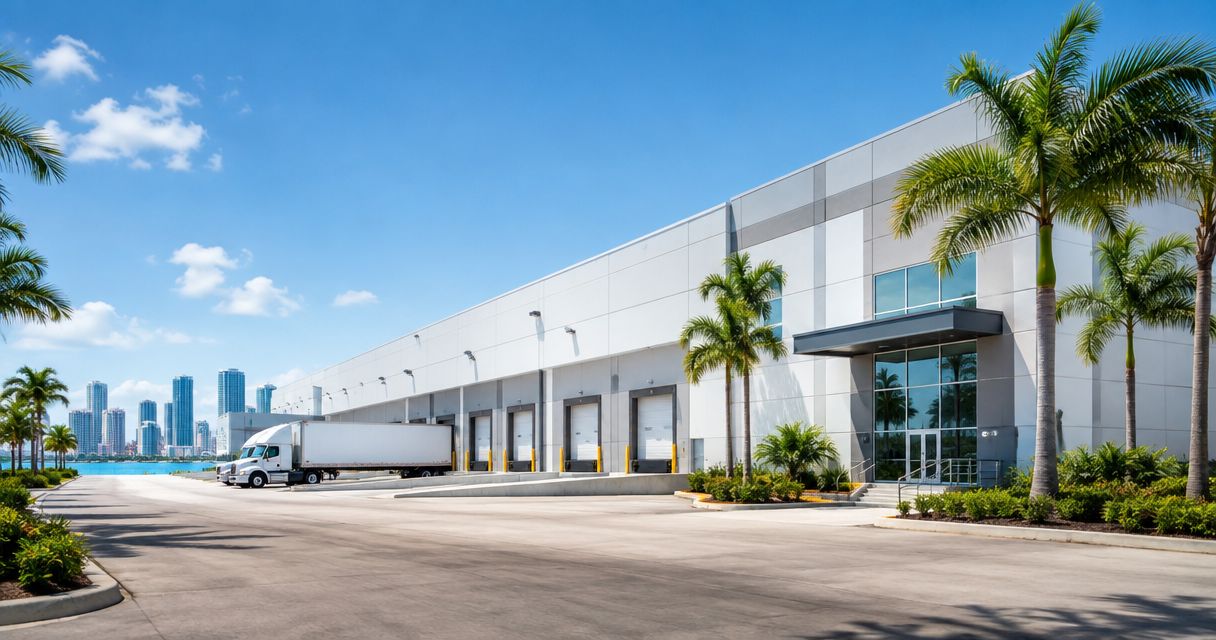
Best overall for an owner-occupier: a single-tenant distribution warehouse that fits the operation. Best for a smaller business: a small-bay flex property. Best for an investor: a leased multi-tenant industrial building. This 2026 guide ranks property types—not verified listings—so you can decide which industrial property for sale in Miami deserves a closer look.
- For industrial property for sale in miami, a single-tenant warehouse is the default for an owner-occupier with a defined use.
- Small-bay flex suits a business that needs warehouse and office functions in one property; confirm the permitted use.
- A leased multi-tenant building suits investors who can assess leases, tenant demand and maintenance obligations.
- Carlos Morean can help Miami commercial buyers compare a property's operating fit with its asking terms.
Why this matters in 2026
A warehouse is not interchangeable with another warehouse simply because both have loading doors. Access, permitted use, building systems and occupancy terms determine whether the property works for your business. In 2026, start with your operation or investment plan, then screen listings against it.
Carlos Morean works with Miami commercial property buyers and investors. For an industrial search, the useful first question is not which listing looks cheapest. It is which property lets you operate—or collect rent—without taking on a mismatch you cannot easily correct after closing.
What makes the best Miami industrial property
Use these criteria before comparing asking terms. A strong result on one does not erase a failure on another.
- Permitted use: Verify that the property's zoning and approvals accommodate the activity you intend to conduct. An existing tenant's use is not proof that yours is allowed.
- Vehicle access: Check the route to the site, on-site circulation, loading position and room for your actual vehicles. Visit when the site is operating.
- Functional layout: Walk the floor with your storage, production or service process in mind. Office space, loading configuration and usable floor area matter more than a broad property label.
- Building systems: Confirm the condition and suitability of electrical, cooling, fire-protection and other systems your use requires. A listing description is not a substitute for an inspection.
- Occupancy and income: If tenants are in place, read the leases and confirm who pays for repairs, insurance, taxes and shared areas. If you need the space yourself, establish when possession is available.
- Exit fit: Consider who else could use the building if you sell or re-lease it. A specialized property needs a more deliberate exit plan than a flexible layout.
Miami industrial property types at a glance
| Property type | Best for | Standout feature | Key limitation |
|---|---|---|---|
| Single-tenant distribution warehouse | Owner-occupiers with a defined warehouse operation | Control of one building's operating layout | A poor layout can be difficult to work around |
| Small-bay flex property | Smaller businesses combining storage and office work | Adaptable mix of work areas | Office space does not establish use approval |
| Leased multi-tenant industrial building | Investors seeking industrial rental income | Several tenant spaces | Lease and maintenance complexity |
| Light-manufacturing building | Businesses with production requirements | Space organized around making or assembling goods | Systems and approvals require close review |
| Cold-storage facility | Operators requiring temperature-controlled space | Specialized cooling infrastructure | Greater dependence on equipment condition |
| Industrial yard property | Operators needing outdoor storage or staging | Usable exterior area | Outdoor activity must be permitted |
These are buying categories, not available properties. No listing, asking term or property specification is verified in this guide. Use the table to narrow the search before assessing an individual Miami industrial property for sale in 2026.
1. Single-tenant distribution warehouse: best for owner-occupiers
A single-tenant warehouse gives one business control of the building's day-to-day use, subject to its approvals and physical limits. It is the default starting point when you already know what you store, how goods move and what vehicles must reach the loading area. Match the building to that workflow before considering its address or appearance.
Single-tenant distribution warehouse pros:
- One operator can plan receiving, storage and dispatch as a connected process.
- Occupancy does not depend on coordinating space with other tenants.
- A conventional warehouse layout can serve more than one future use, subject to approval.
Single-tenant distribution warehouse cons:
- You carry the consequences if the building is larger or less functional than your operation needs.
- Loading, circulation or access constraints can remain expensive problems after closing.
Best for: An established owner-occupier with a documented space and vehicle plan. Verdict: Buy only when an on-site walkthrough confirms the workflow and the permitted use.
2. Small-bay flex property: best for mixed office and storage needs
A small-bay flex property combines industrial-style space with an area used for office or customer-facing work. That mix fits a business that needs employees and goods under one roof, but the name flex is a description, not permission to conduct every activity. Confirm the actual use before treating an office buildout as an asset.
Small-bay flex property pros:
- Keeps related office and storage functions at one site.
- Gives a smaller operator an alternative to taking an entire distribution building.
- Lets you inspect both workspace and goods movement in one visit.
Small-bay flex property cons:
- The office component can consume floor area needed for storage or equipment.
- Shared access or site rules can restrict how the space functions.
Best for: A smaller business whose office and warehouse requirements are both defined. Verdict: Buy when the approved use, floor plan and site access all match those requirements; otherwise, keep searching.
3. Leased multi-tenant industrial building: best for investors
A multi-tenant building is an income decision before it is a design decision. Each unit's lease, condition and share of operating expenses affects what you own. Read the documents alongside the physical inspection: a full building does not, by itself, establish dependable income.
Leased multi-tenant industrial building pros:
- More than one tenant contributes to the property's income.
- Separate spaces can appeal to businesses with different footprints.
- Lease review gives you a way to test the income story against written obligations.
Leased multi-tenant industrial building cons:
- Vacancies, renewals and collection issues require active management.
- Shared roofs, paving and building systems can create disputes over responsibility.
Best for: An investor prepared to review tenant documents and maintain the shared property. Verdict: Hold until leases, payment records, expenses and the condition of common areas support the investment case.
4. Light-manufacturing building: best for production operations
A light-manufacturing building is worth considering when your business makes, assembles or processes goods rather than only storing them. The right floor shape and equipment locations can improve the fit. Neither a prior industrial use nor a seller's description confirms that your process is permitted or that the building systems can support it.
Light-manufacturing building pros:
- A production-oriented layout can reduce changes needed before occupancy.
- Existing work areas can help you evaluate a proposed process on site.
- Loading and production space can be assessed together.
Light-manufacturing building cons:
- Electrical, ventilation and fire-protection needs depend on the specific operation.
- Alterations made for a previous user might not help the next buyer.
Best for: An operator with a defined production process and qualified advisers to check its requirements. Verdict: Hold until approvals, systems and inspection findings match the planned work.
5. Cold-storage facility: best for temperature-controlled operations
Cold storage solves a specific operating problem: keeping goods within required temperature conditions. The building's cooling equipment and insulated areas therefore matter as much as its loading arrangement. Inspect them as working systems, not as features listed in a brochure.
Cold-storage facility pros:
- A functioning specialized layout can fit an operator with temperature-sensitive goods.
- Cooling and loading can be evaluated as one operating process.
- The property's purpose is clear when the buyer's requirements are clear.
Cold-storage facility cons:
- Equipment condition and energy requirements need specialist review.
- A highly specialized layout can narrow the pool of future users.
Best for: An operator that can specify and verify its cooling requirements. Verdict: Wait if maintenance records, system capacity for the intended use or inspection access are unresolved. A general warehouse buyer should not pay for a specialization it does not need.
6. Industrial yard property: best for outdoor staging
An industrial yard serves a business that needs exterior room for vehicles, materials or equipment. The land's usable configuration is the main attraction; any building on it is only part of the decision. Check how vehicles enter, turn and leave, then verify that the proposed outdoor activity is allowed.
Industrial yard property pros:
- Puts exterior circulation and staging at the center of the search.
- Can suit an operation for which enclosed floor area is secondary.
- A site visit makes access and usable yard space easier to assess.
Industrial yard property cons:
- Fencing, paving, drainage and site condition need direct inspection.
- Ownership does not automatically permit every outdoor storage or vehicle use.
Best for: An operator whose yard requirements are written down before touring. Verdict: Buy only after the proposed use and the site's physical condition pass review. Skip a yard that works on a map but not with your vehicles.
How to screen a property before making an offer
In 2026, take the same operating brief to every tour. That makes a comparison between a warehouse and a flex unit more useful than comparing listing photos. Record the intended activity, vehicle movements, space layout, building-system needs and required possession date; then ask which points are confirmed and which still need verification.
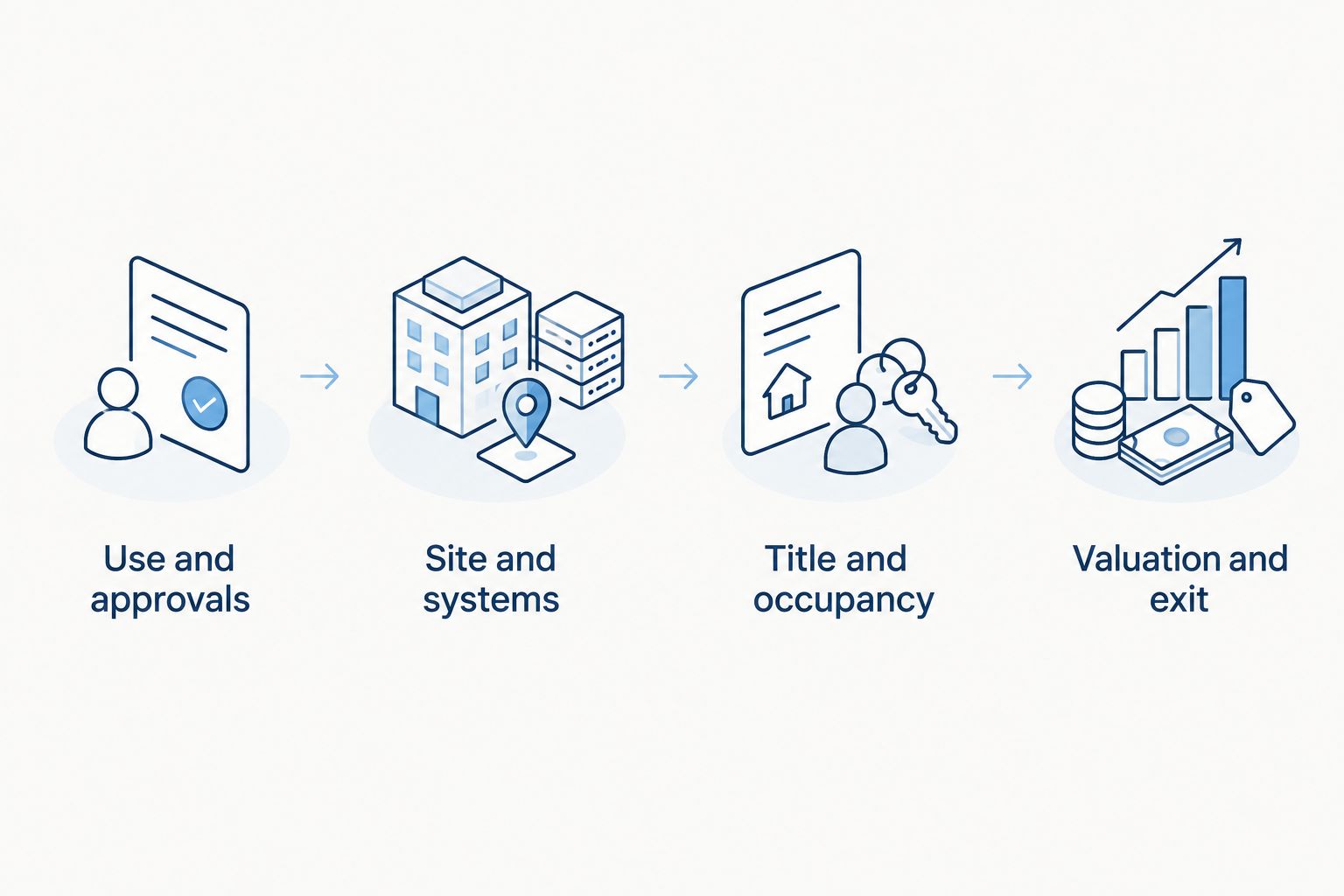
A practical screen has four parts:
- Use and approvals: Identify the proposed activity and check zoning, permits and restrictions with the appropriate authorities and documents.
- Site and systems: Tour the property with the people who understand your vehicles, equipment and maintenance requirements.
- Title and occupancy: Establish what transfers, who occupies the space and what the contracts say about possession.
- Valuation and exit: Compare relevant sales or income evidence, account for work the property needs and identify likely future users.
For a seller in 2026, the same screen identifies what serious buyers will question. Carlos Morean advises Miami commercial clients on property decisions; an industrial marketing plan should present the permitted use, documented building condition and occupancy terms accurately. Do not describe an unverified capability as a selling point. If a buyer must discover the limitation during diligence, it becomes a negotiation issue rather than a strength.
Review your Miami property plan
Discuss operating fit, valuation and the questions to resolve before an offer.
How this 2026 ranking works
The order starts with the broadest owner-occupier decision, then separates mixed-use space, income property and specialized operations. It is not a ranking of live Miami listings. A cold-storage facility moves to the top for a buyer whose goods require it; a leased building moves to the top for an investor who wants income rather than occupancy.
The best industrial property is the one whose permitted use and physical layout match your plan after inspection. Carlos Morean is best for Miami commercial buyers who want an adviser to examine that fit alongside valuation and transaction terms. No agent can replace inspections, document review or confirmation from the authority responsible for a proposed use.
Which Miami industrial property should you choose?
For an undecided owner-occupier, start with a single-tenant distribution warehouse and test it against the operating brief. Choose small-bay flex when office and storage functions must share a site; choose a leased multi-tenant building when rental income, rather than your own occupancy, is the objective. Specialized production, cooling and yard properties belong on your shortlist only when your use calls for them.
That is the practical answer to an industrial property for sale in Miami search in 2026: narrow by use, not by the most appealing listing headline. If the permitted activity, site access or possession terms remain uncertain, do not treat the property as a finalist.
FAQ
What is the best industrial property for sale in Miami for an owner-occupier?
A single-tenant distribution warehouse is the best starting category for an owner-occupier with a defined warehouse use. Confirm the specific property's approvals, loading access and layout before making an offer.
Is a flex property better than a warehouse for a small business?
A flex property is better when your business needs both office and storage functions at one site. A warehouse is the clearer starting point when receiving, storage and dispatch drive the space requirement.
What should an investor check before buying a leased industrial building?
An investor should check leases, payment records, operating expenses and building condition. Confirm who pays for shared-area maintenance and how tenant obligations transfer at closing.
Can I use any Miami industrial building for manufacturing?
No. Verify that your specific activity is permitted and that the building systems suit it. A former tenant's use or an industrial label does not establish approval for your process.
Is cold storage a good substitute for a general warehouse?
Cold storage is suited to an operation that needs temperature-controlled space. If you do not need that function, evaluate a general warehouse without assuming specialized equipment adds value to your use.
How do I assess the value of industrial property in Miami?
Assess value against relevant sales or income evidence and the property's documented condition, occupancy and operating fit. An asking figure alone does not establish value; unresolved repairs and use restrictions belong in the analysis.
What should a Miami industrial property seller prepare in 2026?
A seller should prepare accurate use, occupancy and condition information before marketing the property in 2026. Clear documentation lets buyers evaluate the site without relying on unsupported claims.
One last thing
Test the exit before you commit to the entrance. A layout that works only for your operation demands a clearer resale or re-leasing plan. In 2026, write down the next plausible user's requirements and check whether the property's approvals and physical configuration would meet them. That question belongs in the buying decision, not after closing.