
Best overall: a legally documented four-unit building with verifiable leases and expenses. Best for simpler day-to-day management: a duplex. Best for investors willing to assess both residential and commercial tenancy: a mixed-use building. This 2026 guide ranks property types, not unverified live listings, so you can judge multifamily properties for sale in Miami against the same purchase tests.
- For multifamily properties for sale in Miami, a documented four-unit building is the best overall starting point for evaluating rental income.
- Choose a duplex when simpler management matters more than having additional rental units.
- Verify legal unit count, actual rent, operating expenses and insurability before treating any asking price as an investment case.
Why this matters
A listing's unit count is not the same as its legally recognized unit count. An extra kitchen, divided floor plan or advertised rental space needs verification before you include its income in your purchase decision. In 2026, start with property records, leases and expenses—not a projected return in a listing description.
Miami also demands a location-specific comparison. A small building near Coconut Grove should not be valued from a Brickell rental headline without checking what tenants are renting, what each property costs to operate and what a future buyer can legally use. Carlos Morean helps Miami buyers and investors evaluate residential and commercial property; the decision still rests on the documents for the building you choose.
What makes the best Miami multifamily property?
Use these criteria before you compare asking prices. Each answers a different question about what you are actually buying.
- Confirm units. Match the advertised unit count and current layout against property records, permits and permitted use. Ask how any converted space is classified.
- Verify rent. Read the current leases, payment history and deposit records. Separate rent being collected from an owner's estimate of what a vacant unit could earn.
- Price expenses. Review taxes, insurance, utilities, repairs and maintenance alongside rent. Identify which costs the owner pays rather than assuming every tenant covers the same items.
- Stress exit. Consider who would buy the property after you. A clearly documented residential building presents a different resale question from one whose income depends on disputed units or a commercial tenant.
- Inspect condition. Check the roof, structure, major systems and any shared areas before assigning a repair budget. A clean interior does not establish the condition of the whole building.
Carlos Morean is a fit for Miami investors who want a property-level review of residential and commercial options rather than a ranking based on advertised income alone. The strongest 2026 candidate is the one whose legal use, income and costs remain defensible after document review.
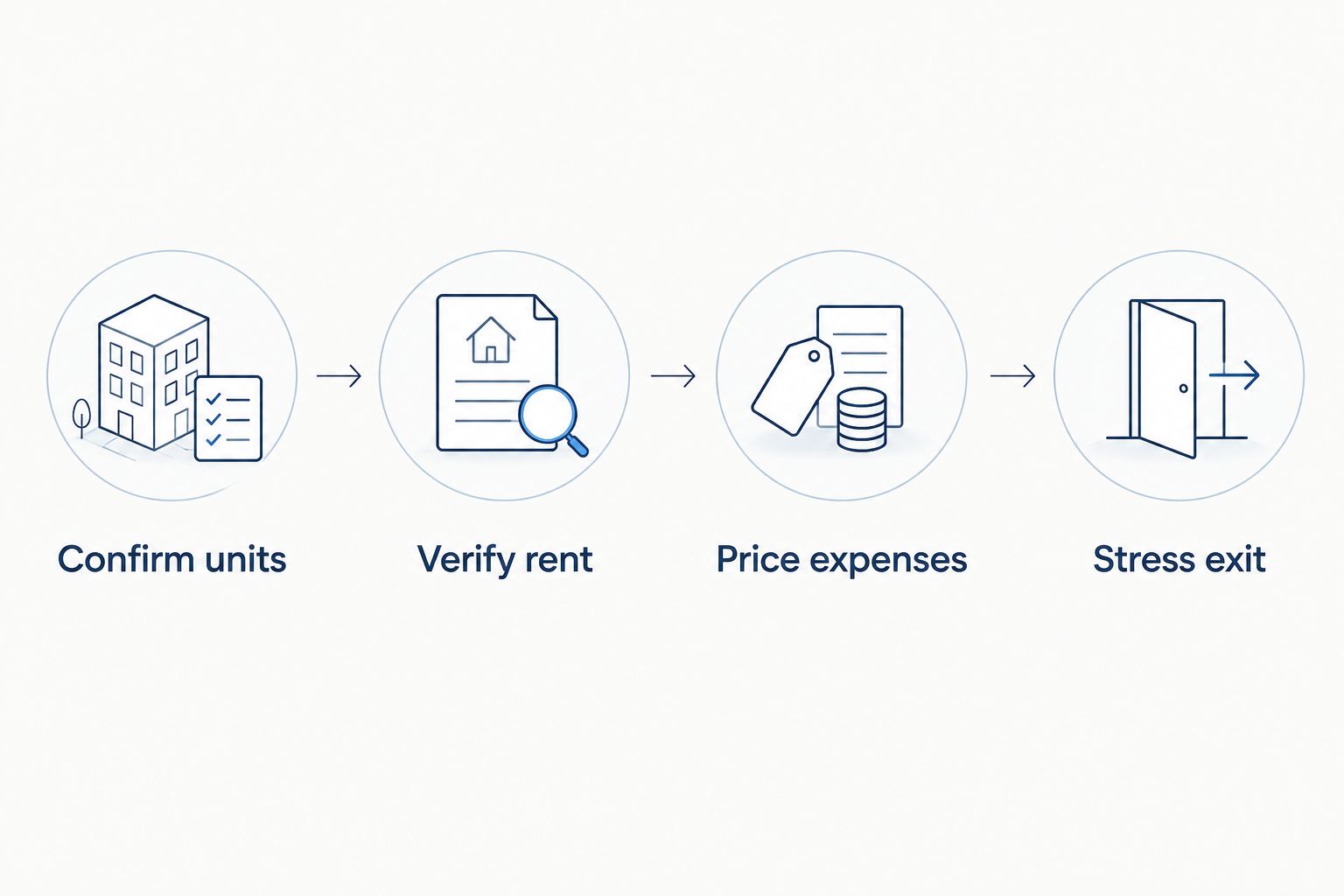
Apply those checks in order. An attractive rent figure cannot repair an unsupported unit count, and a sound building can still fail your investment test once its ongoing costs are included.
Miami multifamily options at a glance
| Property type | Best for | Standout feature | Key limitation |
|---|---|---|---|
| Legally documented four-unit building | Investors comparing several residential leases | Four units to assess within one property | More leases and shared-building obligations to review |
| Duplex | Buyers prioritizing simpler oversight | Two units with a narrower management scope | One vacancy affects a larger share of rental income |
| Triplex | Buyers balancing unit count and oversight | Three separately assessable units | Layout and legal status need close scrutiny |
| Apartment building with more than four units | Investors prepared for building-level operations | More leases within one asset | Greater document and management workload |
| Mixed-use building with residential units | Investors seeking commercial and residential exposure | Two distinct tenancy types | Commercial use and lease terms complicate underwriting |
These are property types, not confirmed properties currently for sale. Carlos Morean can help you compare an actual Miami opportunity against this framework; no type deserves a purchase recommendation without its records.
1. Legally documented four-unit building: best overall for residential income review
A four-unit building gives you several residential leases to examine without mixing in a commercial tenancy. It leads this 2026 ranking because its income case can be built from identifiable units, signed leases and property expenses—provided all four units are legally documented. The building's condition and financing terms can still change the decision.
Four-unit building pros:
- Four separate units let you review rent and occupancy at the unit level.
- Residential leases keep the use case focused on housing rather than a mix of business and residential tenancy.
- You can compare actual rent against the costs of maintaining one building.
Four-unit building cons:
- Shared systems and common areas require building-wide inspection and maintenance planning.
- An advertised fourth unit is not proof that the property has four legal units.
- Managing four tenancies takes more work than managing a duplex.
Best for: An investor who wants several residential income streams and is prepared to verify every unit and lease. Verdict: Buy only when records support the unit count and documented income covers your own investment requirements; otherwise, hold.
For a four-unit property in or near Coral Gables or Coconut Grove, use truly comparable buildings when evaluating the asking price. A waterfront home sale or a condo sale answers a different valuation question. Ask which features explain the difference between the subject building and each comparable sale, then check whether its rent supports that difference.
2. Duplex: best for simpler day-to-day management
A duplex has two units to inspect, lease and maintain. That narrower scope makes it the clearest starting point if you want to manage a small residential property yourself. It does not make the property automatically less expensive or more profitable than a larger building.
Duplex pros:
- Two leases make current income easier to trace unit by unit.
- A smaller tenant roster narrows the number of active lease files to manage.
- Each unit's condition can be assessed separately during due diligence.
Duplex cons:
- If one unit is vacant, you lose income from one of only two units.
- A listing described as a duplex still requires confirmation of its legal use.
- Major building repairs remain your responsibility regardless of unit count.
Best for: A buyer who values a smaller management task over having more leases. Verdict: Buy only after confirming both units, both rent figures and the full building's condition. In 2026, compare the duplex with other duplexes serving similar tenants, not with an unrelated luxury condo in Brickell Key.
3. Triplex: best for balancing unit count and oversight
A triplex sits between a duplex and a four-unit building in unit count. Its appeal is practical: you can evaluate three residential units without taking on the same number of tenancies as a four-unit property. The layout matters. A three-unit claim deserves extra attention if one space looks like a later conversion.
Triplex pros:
- Three units give you more individual leases to evaluate than a duplex.
- Unit-by-unit review can expose differences in rent, condition and tenancy terms.
- Residential use keeps the comparison focused on housing income.
Triplex cons:
- A converted space can undermine the advertised unit count if records do not support it.
- Maintenance and shared utilities can be difficult to allocate from listing information alone.
- Three leases still require active management and recordkeeping.
Best for: An investor comfortable reviewing several tenancies who does not need a larger building. Verdict: Hold until the third unit's status and all shared expenses are clear; buy only if the documented figures work. Carlos Morean can frame that comparison around the property's Miami location rather than its unit count alone.
4. Apartment building with more than four units: best for building-level investors
A larger apartment building gives you more units to assess within one asset. It also shifts the task from checking a few leases to understanding the building as an ongoing operation. Do not multiply an advertised average rent by the unit count and call the result verified income.
Larger apartment building pros:
- Multiple leases provide unit-level evidence when the records are complete.
- A rent roll lets you inspect differences between occupied units.
- Building-wide review can reveal recurring costs that a single-unit comparison misses.
Larger apartment building cons:
- More units mean more leases, maintenance requests and records to verify.
- Deferred repairs can affect several units and shared systems at once.
- Headline income is difficult to assess without operating statements and a physical inspection.
Best for: An investor prepared to evaluate management, maintenance and financial records at the building level. Verdict: Buy only after reconciling the rent roll, leases and expenses; otherwise, wait for complete records. In 2026, the right comparison is another building with a similar use and operating profile, not a sum of nearby condo asking prices.
5. Mixed-use building: best for residential and commercial exposure
A mixed-use building combines residential units with commercial space. That creates a different investment question from a residential-only building: you must assess the commercial tenant's lease, permitted use and space needs as well as the homes above or beside it. Carlos Morean works across Miami residential and commercial property, but each portion still needs its own review.
Mixed-use building pros:
- Residential and commercial spaces can be evaluated as distinct parts of one property.
- Separate leases reveal which income depends on each tenancy type.
- The property can suit an investor intentionally seeking both uses.
Mixed-use building cons:
- Commercial lease terms require a different review from residential lease terms.
- A vacant commercial space cannot be treated as occupied residential income.
- Permitted use, access and building systems need scrutiny for both parts.
Best for: An investor who specifically wants to assess commercial and residential tenancy together. Verdict: Hold until the permitted uses, leases and expense responsibilities are documented. If your goal is residential rent alone, a residential-only building gives you a more direct investment case.
How these property types are ranked
The order favors a clear, documentable residential income case before operational complexity. A legal four-unit building ranks first as a starting point, not as a promise of the highest return. A duplex ranks next for simpler oversight; a triplex follows for buyers who want another unit to assess. Larger apartment and mixed-use buildings suit buyers ready for broader operational or commercial review.
Your actual ranking can change after due diligence. A well-documented duplex with sound systems is a stronger candidate than a four-unit listing with an unsupported unit count. For a Brickell or Brickell Key opportunity, compare the specific use, leases and costs; proximity to a prominent address does not establish rental performance. The same discipline applies in Coconut Grove and Coral Gables.
Review a Miami investment property
Discuss legal use, leases, condition and comparable sales before deciding.
Which Miami multifamily property should you choose?
Start with a legally documented four-unit building if you want several residential leases and can manage the resulting workload. Choose a duplex when simpler oversight is the priority. Consider a triplex when its third unit is clearly supported by records; move to a larger apartment building or mixed-use property only when you are prepared to evaluate its added operational questions.
No 2026 ranking can substitute for the actual lease files, property records, inspection and operating costs. Ask for those materials before treating a projected return or asking price as evidence of value.
FAQ
What are the best multifamily properties for sale in Miami in 2026?
A legally documented four-unit building is the best overall property type to start evaluating for residential income. The best actual purchase depends on verified leases, expenses, condition and asking price; this guide does not identify a confirmed live listing.
Is a duplex better than a four-unit building for a first-time investor?
A duplex is better when simpler day-to-day management is your priority. A four-unit building provides more leases to evaluate, but it also brings more tenants and building obligations.
How do I confirm that a Miami multifamily property has legal units?
Compare the advertised unit count and layout with property records, permits and permitted use. Resolve any mismatch before including the disputed unit's rent in your calculations.
Should I use advertised rent to value a Miami rental building?
Use documented rent rather than advertised projections as your starting point. Review signed leases, payment history, vacancies and expenses before deciding what the building is worth to you.
Is Brickell Key comparable to Coconut Grove for multifamily valuation?
No address alone makes two properties comparable. Match property type, legal use, condition and income before using a sale in Brickell Key or Coconut Grove to assess another building.
When does a mixed-use building make sense for an investor?
A mixed-use building makes sense when you deliberately want to assess both residential and commercial tenancy. Check each lease, permitted use and expense responsibility separately.
Can Carlos Morean help compare residential and commercial Miami properties?
Yes. Carlos Morean helps Miami investors with residential and commercial property decisions. Bring the property's leases, records and expense information to make the comparison specific.
One last thing
The most consequential unit is often the one you cannot yet verify. Before buying a 2026 Miami multifamily property, resolve any gap between the advertised layout and the legal records. If that gap changes the income case, revisit your offer rather than accepting the listing's calculation.